
-
-
-
BLOG&EVENT

-
ABOUT US
Overview of Conveyor Belt Systems Suited for Diverse Industrial Applications
Mar 26,2026
Overview of Conveyor Belt Systems Suited for Diverse Industrial Applications
Introduction: Industrial conveyor belt systems using carbon or stainless steel belts enhance efficiency, durability, and automation across varied sectors, improving throughput and reducing manual handling.
Daily manufacturing routines often reveal hidden inefficiencies: manual material handling that slows processes, equipment poorly suited to varied environments, or systems that wear out too quickly under demanding conditions. An industrial conveyor belt system designed to adapt and perform across multiple sectors addresses these workflow interruptions by streamlining operations and maintaining consistent throughput. Such conveyor systems, particularly those produced by a reputable steel belt conveyor manufacturer, can transform daily production challenges into manageable tasks, allowing industries to focus on innovation and growth rather than routine operational glitches.
Comparing Carbon Steel and Stainless Steel Belt Conveyors
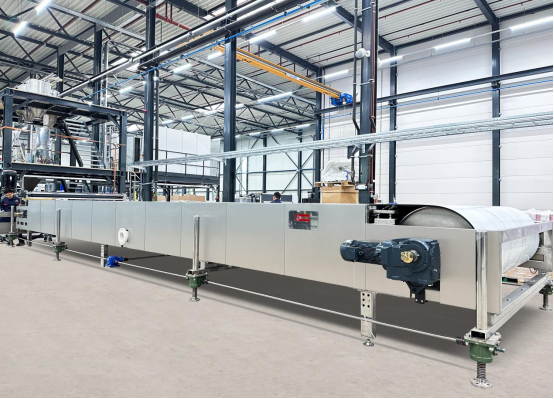
When selecting an industrial conveyor belt system, the choice between carbon steel and stainless steel belts significantly influences performance and application suitability. Carbon steel belt conveyors are favored for their impressive strength and resilience, qualities that make them highly effective in heavy-duty industrial tasks involving intense heat or abrasive materials. Their superior thermal conductivity suits processes requiring rapid heat transfers, such as drying or baking operations. Conversely, stainless steel belt conveyors shine in environments where hygiene and corrosion resistance are top priorities. A stainless steel belt conveyor manufacturer typically incorporates surface treatments that reduce residue buildup, making these conveyors indispensable in pharmaceutical, chemical, and food sectors. The durability and precision of both carbon and stainless steel belts come from meticulous manufacturing standards upheld by dedicated steel belt conveyor manufacturers who ensure every conveyor meets strict quality criteria. Deciding between these conveyor types involves assessing environmental demands and maintenance capacities, but both play valuable roles across a range of applications, highlighting the versatility of the industrial conveyor belt system.
Automation Integration and Its Impact on Production Efficiency
Modern industrial conveyor belt systems benefit widely from integration with automated feeding, sensing, and discharge components, offering a seamless workflow that cuts down manual intervention and reduces error rates. A steel belt conveyor manufacturer often designs these systems with modularity in mind, enabling scalable upgrades that accommodate growing production needs or shifts in product types. Automation components, such as sensors and robotic feeders, improve precision in material handling, ensuring products move through assembly lines with less downtime and greater consistency. This smoother operation not only saves time but can reduce operational costs and energy consumption. Particularly in industries requiring high accuracy or continuous throughput, such as precision machinery or composite materials manufacturing, the marriage of automation with robust conveyor technology elevates production levels significantly. Whether the conveyor is carbon steel or stainless steel, the capacity for automated integration defines its relevance in future-proof industrial settings, making the industrial conveyor belt system an essential investment for companies seeking sustained efficiency and reliability.
Sector-Specific Uses: From Woodworking to Oil and Gas
Different industries impose unique demands on conveyor systems, with a steel belt conveyor manufacturer tailoring products to suit these specific requirements. In woodworking, the industrial conveyor belt system must handle bulky or irregularly shaped items while minimizing dust accumulation, often relying on carbon steel belts for their toughness and heat resistance in drying chambers. The film casting sector values smooth, residue-resistant stainless steel belts that allow delicate materials to pass without contamination. Chemical and oil & gas industries require conveyors that withstand harsh chemicals and extreme temperatures; both carbon steel and stainless steel belt conveyors serve these roles effectively depending on the exact conditions. The ability of a conveyor system to adapt to such a spectrum of materials and operational environments underlines the importance of selecting reliable manufacturers committed to innovation and quality — companies that excel as carbon steel belt conveyor manufacturers and stainless steel belt conveyor manufacturers alike. This versatility helps industries maintain production continuity and meet the highest safety and hygiene standards demanded by their sectors.
The industrial conveyor belt system from a trusted steel belt conveyor manufacturer offers adaptability, durability, and precision, meeting diverse industrial needs with quiet efficiency and dependable design. Its combination of material strength and automation readiness transforms labor-intensive processes into streamlined sequences while standing up to rigorous conditions encountered across industries. If operations require a reliable backbone for material handling that balances robustness with cleanliness and integrates seamlessly with modern automation, these conveyors fit naturally into evolving workflows, promising constant performance improvements and operational ease in the years to come.
References
- CONSOL Carbon Steel Belt - Metal Conveyor Belt - Industrial Conveyor Belt Systems – Overview of carbon steel belt features and applications.
- Consol Double Belt Flaker - Steel Belt Conveyor – Details on double belt flaker cooling system.
- Consol Carbon Steel Belt - Steel Belt Conveyor – Information about CS1300 carbon steel belt specifications.
- Consol Stainless Steel Belt AS1200 - Metal Conveyor – Insights into AS1200 stainless steel belt applications.
- Consol Precision Steel Belt for Industrial Conveyor Systems – Discussion on precision steel belt for industrial use.
Related Posts
Steel belt pastillator granulation production line for jewelry wax middle temperature wax
Rotary belt condensation pastillator granulator&pelletizer is using low melting point characteristic of the material (50 ℃ to 300 ℃), through the feeding head, the liquid material will drop into the upstream moving steel belt,with the continuous spray cooling device set at the bottom of the steel belt (spray type water cooling), materials will be cooled quickly and become solidification in the process of conveying
Contact Us
E-mail
info2@consolbelts.com
Phone/WhatsApp/Wechat
+86 18820135908
19, No.63 jieyuan road, Shawan town, Panyu dist, Guangzhou, China


Request Quote
We will contact you within one working day. Please pay attention to your email.